IoT Mobile Apps
Designing the Connected Home
Four years as the design owner for Kohler Konnect: iOS, Android, and a web portal for smart bath and kitchen products, working across 6+ development teams.
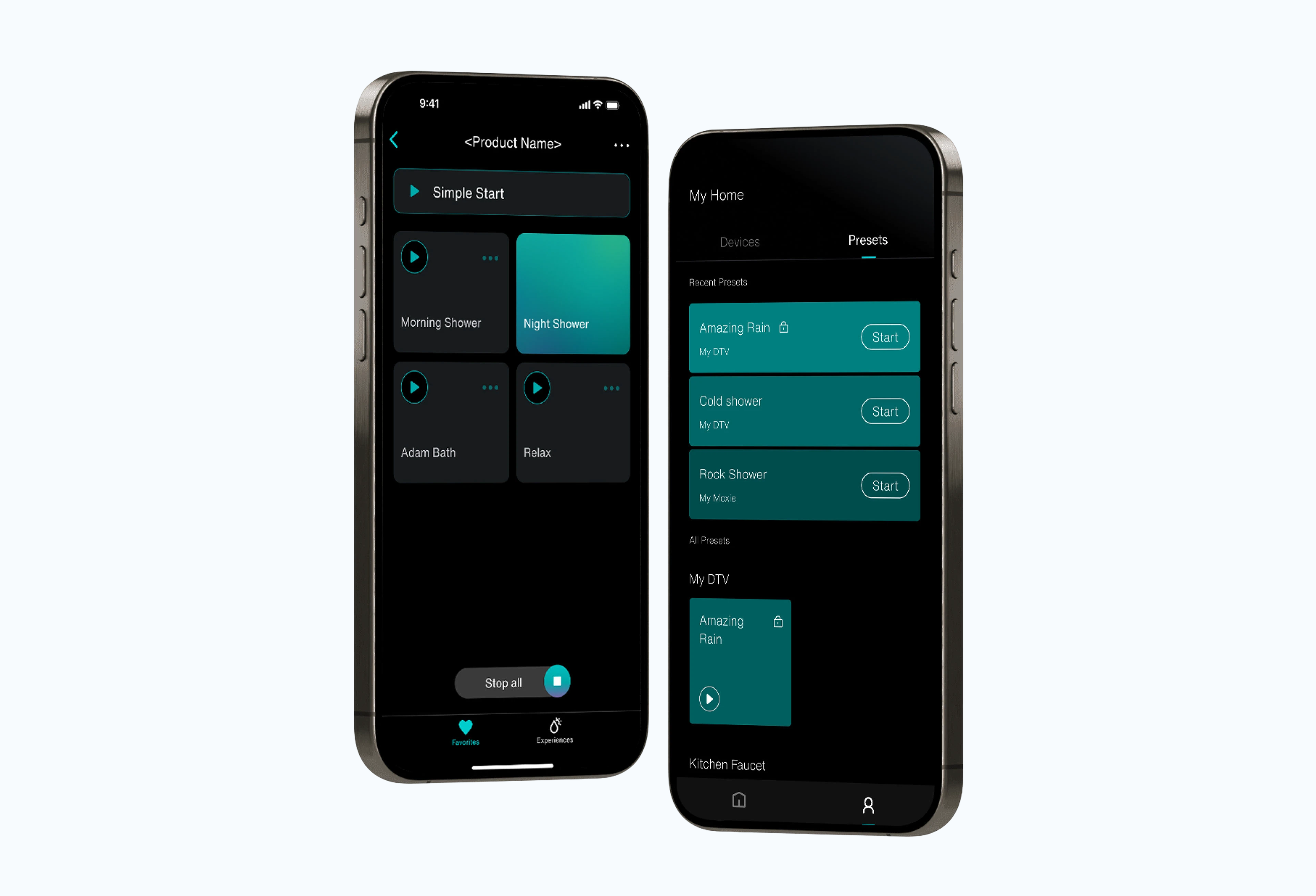
- Role
- Senior UX Designer. Sole designer across the product line.
- Product
- Kohler Konnect app (iOS + Android), remote control design, and Admin Web Portal
- Domain
- IoT, smart kitchen and bath
- Deliverables
- Design system for app and control, Pixel-perfect UI, UX improvements, Micro animations and illustrations, Development support
- Duration
- 4 years
- Tools
- Figma, Adobe Creative Suite
Executive Summary
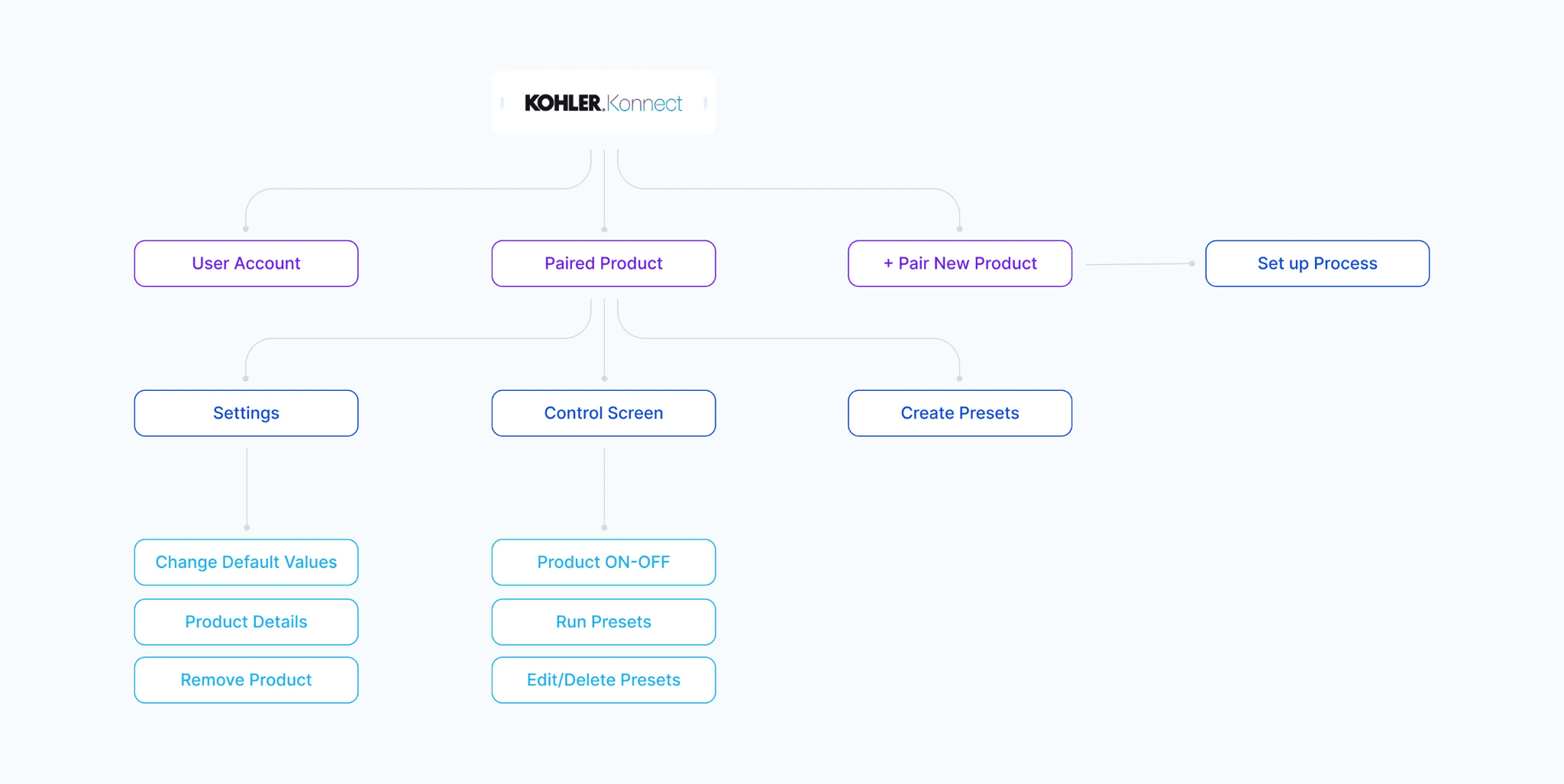
Kohler Konnect lets people control smart showers, baths, and kitchen products from their phone. For four years I was the sole designer across this product line: I built the design system for the app and its control surfaces (HMIs), designed iOS and Android experiences, created the Admin Portal for the customer service team, and worked as the single design point of contact for stakeholders, developers, QA, cloud, and firmware teams.
Results: design inconsistencies down ~40%, development time down ~20% on a recent project, designing across 12+ smart products.

UX Design Awards 2024 Nominee: Anthem+ Shower Control Interfaces
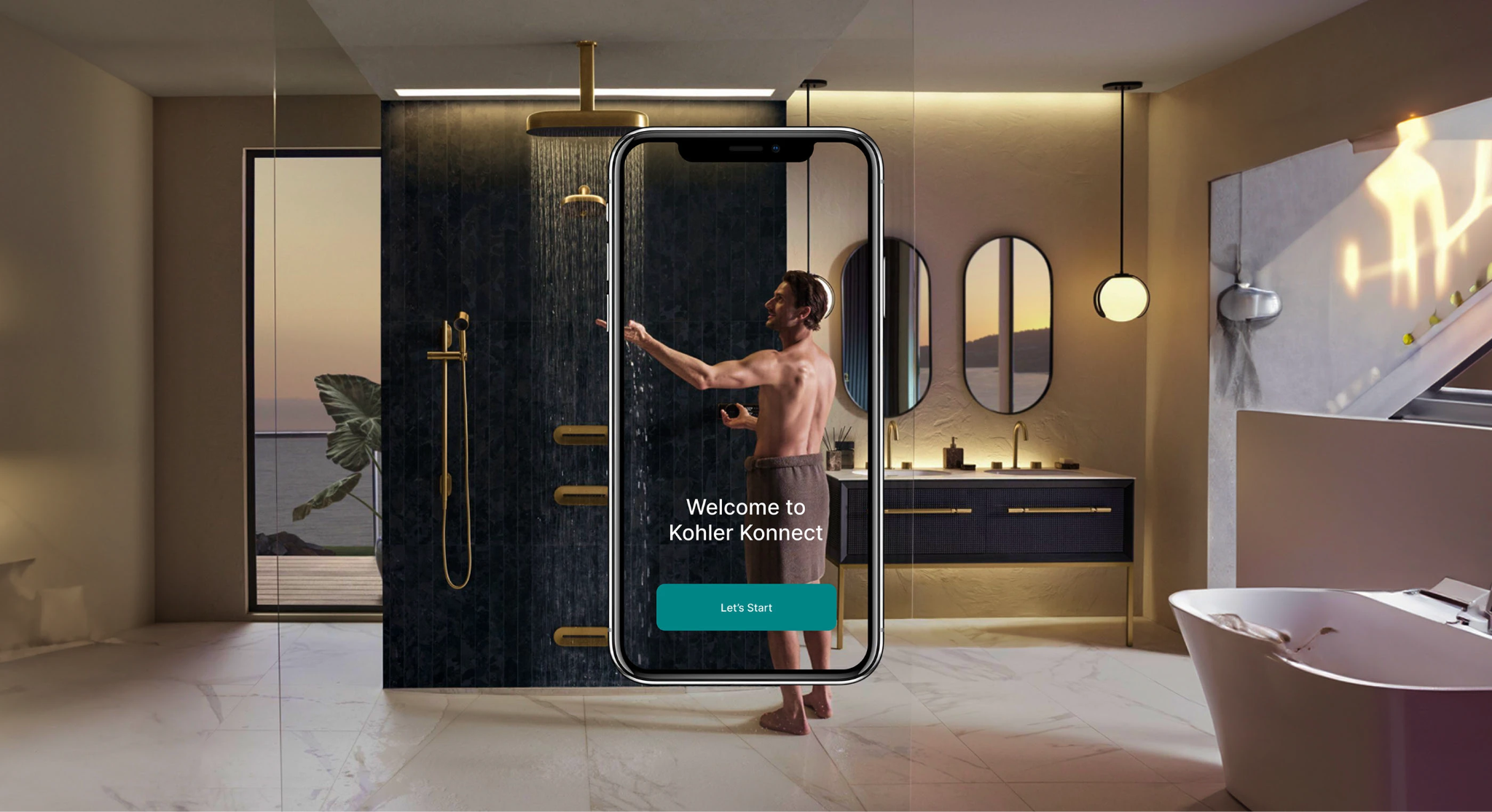
One of the products I worked on, the Anthem+ Smart Showering Valves and Controls, was nominated for the international UX Design Awards 2024 in the Product UI category, with my name credited among the three designers.
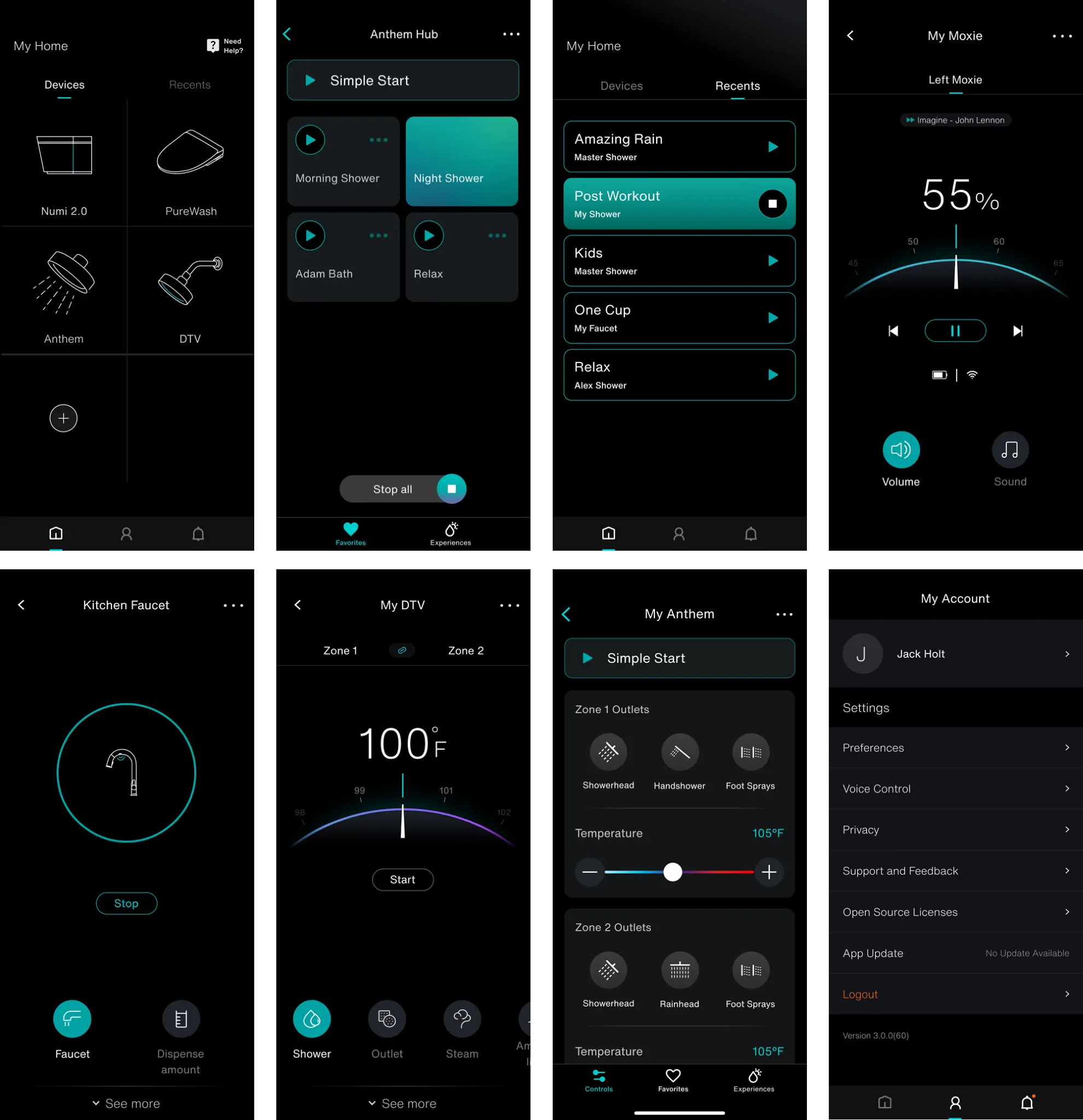
Anthem+ evolves the home shower into a spa-like experience with steam, sound, and light control. The digital interface manages up to 12 water outlets, supports nine user presets, and integrates with the Kohler Konnect app for remote access and voice control.
View the official listing on the UX Design Awards arrow_outward
2 · The Challenge
Controlling water temperature from an app is not like tapping a like button: get it wrong and the shower runs cold, or scalding. The UX had to be instant, glanceable, and equally excellent on iOS and Android, because a premium brand cannot ship a second-class experience on either platform.
The operational challenge was just as hard: multiple products, 6+ development teams shipping in parallel, US-based stakeholders across time zones, and one designer. Without a system and a process, I would have become the bottleneck for every screen.
3 · My Role
Research / Business Requirement & Documents & Market Trends
Discovery
User Stories Review & Refine / Sprint
Discovery – Design
Wireframing
Discovery – Design
Design System Components
Design
Pixel Perfect UI Design / Main Flow and Improvements
Design – Deployment
Interactions & Graphics
Design – Development
Prototype / Stakeholders
Design
Sprint Review & Feedback / Sprint
Development – Testing
Field Testing Report / Review & Improvement
Testing – Improvement
App Store Graphics
Deployment
4 · Who I Work With
Being the sole designer did not mean working alone. It meant being the design interface for six different disciplines, each needing different things from me at different stages.
Stakeholders
// Throughout whole development
To understand the project goals and key requirements.
We work together to define the app's features, prioritize functionalities, and more.
Designers
// Throughout whole development
To share ideas, provide feedback, and ensure a cohesive and user-centered design.
Gather feedback from designers to refine the design and ensure it meets project goals.
Android & iOS Developers
// Development phase
To ensure the app's design aligns with technical capabilities and platform guidelines.
Assist them to create a seamless user experience across different devices.
QA Team & Field Testers
// While and post development
In user stories grooming sessions to discuss the app's functionality and usability.
Field tester feedback helps designers make necessary improvements.
Cloud Developers
// Mostly at early stage of design
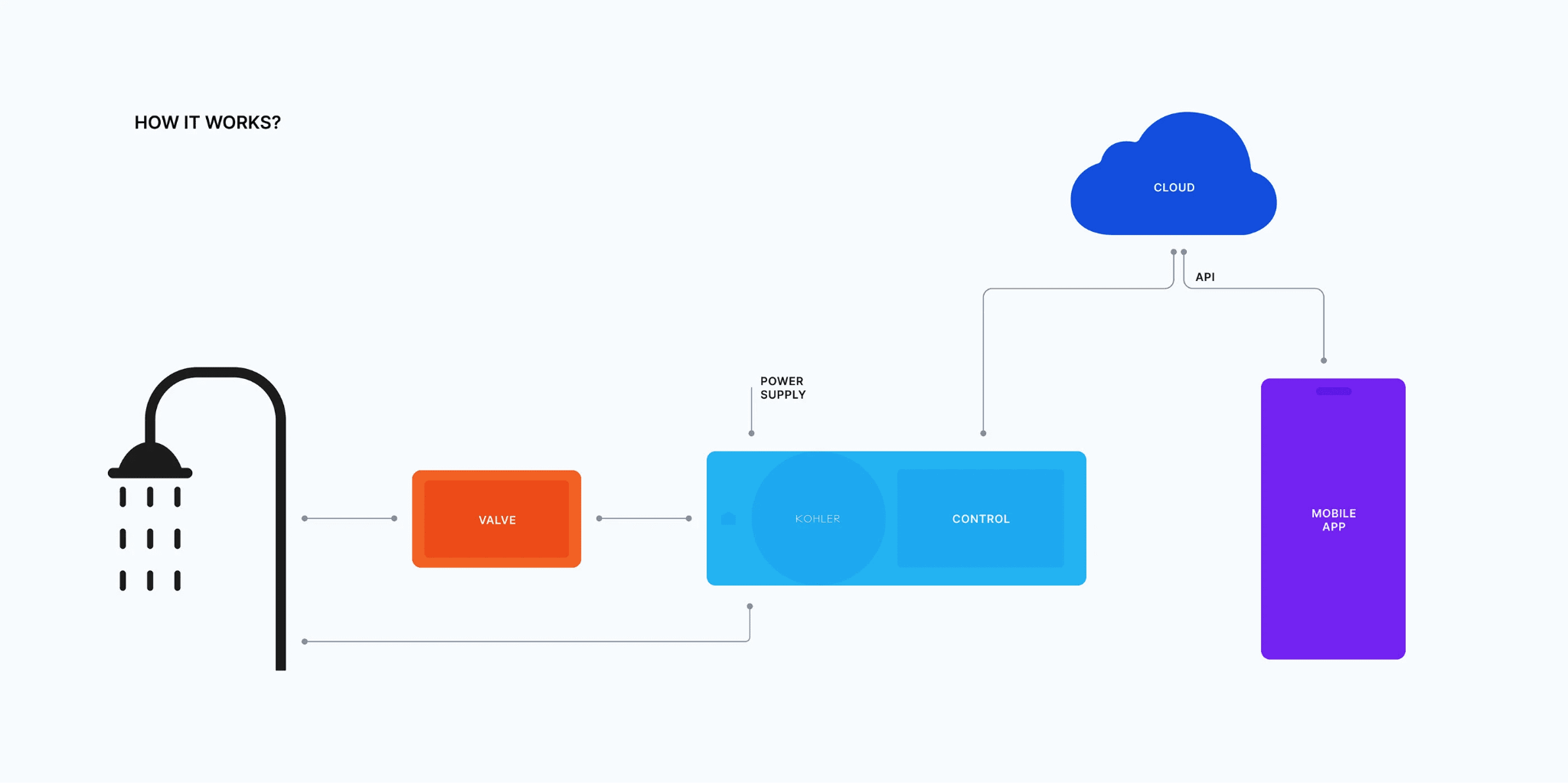
To ensure seamless integration of IoT devices with mobile applications.
We make sure design and APIs are implemented correctly to prevent data loss.
Firmware Engineers
// Mostly at early stage of design
To understand the product functions, underlying processes and limitations.
The firmware team provides insights on what happens in the background for each user action.
5 · How I Made One Designer Scale
Design system as leverage. I built a comprehensive design system for the app and control surfaces, standardizing visual elements so teams could assemble approved patterns without waiting on me. This cut design inconsistencies by ~40% and is the single biggest reason one designer could support six teams.
Platform-aware, not platform-cloned. One design language, expressed natively: iOS follows Human Interface Guidelines, Android follows Material patterns. The system defines what stays identical (branding, device controls, safety patterns) and what adapts per platform.
A working rhythm with every team. Predictable design touch points inside Agile sprints: kickoff, mid-sprint review, handoff. Developers always knew when designs would arrive and whom to ask. This rhythm contributed to a ~20% reduction in development time on a recent project.
US stakeholder management. I presented design directions and negotiated scope directly with US-based stakeholders across time zones, front-loading decisions asynchronously with recorded walkthroughs and annotated Figma files so live meetings were for decisions, not presentations.
Field feedback loop. QA and field testers fed real usage stories back into the design; user stories were reviewed and refined every sprint.
6 · Visual Design
7 · Impact
~40%
reduction in design inconsistencies across the product line
~20%
reduction in development time on a recent project
12+
smart kitchen and bath products designed across
checkCreated the Admin Portal used by the customer service team
checkApp live on the App Store and Google Play, serving Kohler smart home customers worldwide.
checkAnthem+ Shower Control Interfaces nominated for the UX Design Awards 2024, credited as one of three designers.
8 · Reflection
Kohler gave me the opportunity to apply my skills and knowledge on a project that reached real homes. More than that, it taught me the difference between doing design and running design: with six teams and one designer, craft alone does not scale; systems, process, and trust do.
Next case study
One System for Every Delivery